How Eli Lilly’s New Obesity Pill and Q1 Blowout Are Changing the Market
Have you ever looked at your investment portfolio – or even just your personal budget – and felt like you were trying to catch a moving train? The market moves fast, and lately, the pharmaceutical sector has been sprinting. If you’ve been keeping an eye on the news, you already know that Eli Lilly and Company (LLY) has been absolutely dominating financial conversations. Between a jaw-dropping financial report and game-changing clinical trial data, Eli Lilly’s New Obesity Pill is fundamentally shifting how investors and healthcare professionals view the future of metabolic medicine.
When iconic companies make massive waves like this, it reminds me of other high-conviction moves in the market – much like what we saw when Bill Ackman made his big bet on Microsoft, executing a major tech portfolio shift.
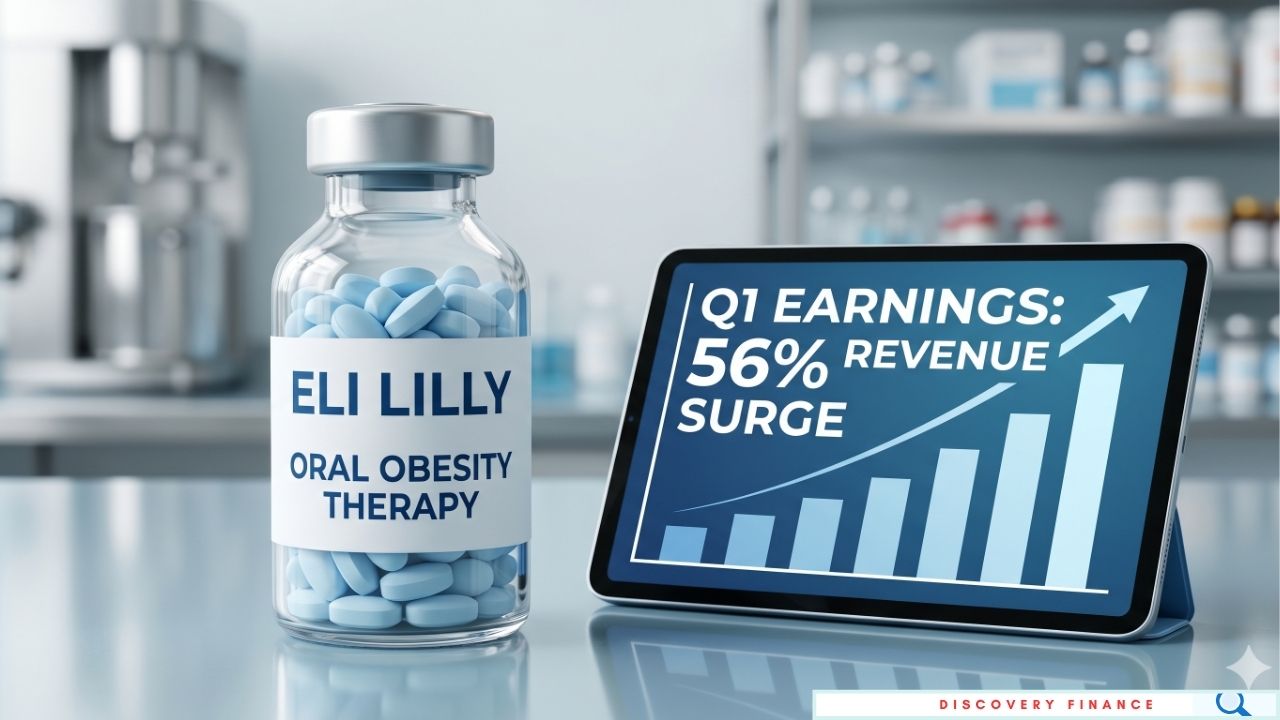
Inside the Hype of Eli Lilly’s New Obesity Pill
For a while now, injectable GLP-1 medications like Zepbound and Mounjaro have been the talk of the town. They work wonder, but they come with a couple of major catches: they require weekly needles, and patients frequently face the “rebound effect”. Studies have shown that when people stop taking these injections, they tend to regain about two-thirds of their lost weight within just a year.
That is exactly why everyone is talking about Eli Lilly’s New Obesity Pill. At the European Congress on Obesity, landmark trial data was dropped for Eli Lilly’s pipeline oral drug, orforglipron (along with its newly launched pill, Foundayo).
The Medical Milestone of Eli Lilly’s New Obesity Pill
The data revealed something incredible: patients who switched from weekly injections over to a daily dose of this oral medication managed to maintain 75% to 80% of their weight loss for an additional year.
Think about what this means on a practical level. A daily pill is vastly cheaper to manufacture, much easier to distribute globally, and far more convenient for everyday people than keeping injectable pens refrigerated in their butter conditioners. By introducing a reliable maintenance routine, Lilly isn’t just treating a condition; they are building a lifelong consumer ecosystem.
The Staggering Scale of the Q1 Earnings Blowout
While the lab results are exciting, the financial numbers are downright historic. Driven by an almost insatiable global demand for Zepbound and Mounjaro, Eli Lilly posted a 56% surge in Q1 revenue. Let that sink in for a second – a multi-billion dollar pharmaceutical giant growing its top line by more than half in a single quarter is almost unheard of.
Because the cash is flowing in so fast, corporate management didn’t hesitate to bump their full-year guidance by a cool $2 billion. They are now projecting total annual revenues to land somewhere between $82 billion and $85 billion.
For everyday investors, seeing this kind of corporate stability is refreshing, especially when macro economic indicators feel so unpredictable. While you’re keeping an eye on massive market growth stories like Lilly, it’s always a smart personal finance move to ensure your liquid cash is working hard for you too. If you are looking for a safe place to park you extra savings while interest rates continue to shift, checking out a solid high-yield savings account guide is a great way to guarantee a reliable return on your emergency fund.
150 Years of History and a Massive Philanthropic Gift
To make this week even more memorable, Eli Lilly celebrated its 150th anniversary on the floor of the New York Stock Exchange (NYSE). But instead of just throwing a party for executives, they decided to mark the milestone with a beautiful global gesture: a $50 million, six-year partnership with UNICEF USA.
This humanitarian funding is specially designed to help low-and-middle-income countries. The goal is to reach over 30 million children and family caregivers, providing critical support for the prevention, early detection, and chronic care of non-communicable diseases (NCDs) like childhood diabetes, heart conditions, and youth obesity. It’s a massive legacy play that shows the company is focused on sustainable global health, not just quarterly profits.
What This Means for Everyday Investors
To put a bow on an incredibly chaotic and exciting week, Lilly’s tock also traded ex-dividend, securing a sweet $1.73 per share payout for stockholders of record.
At the end of the day, the overarching lesson here is clear: Eli Lilly isn’t just riding the current wellness wave – they are actively building the infrastructure for the future of global healthcare. Between a multi-billion-dollar earnings beat, a transformative shift toward oral maintenance medications, and a deep commitment to global philanthropy, LLY has solidified its spot as a true market titan. Keep this one on your watchlist as those oral pipeline alternatives get close to full commercial scaling!
Share this:



One Comment
Pingback: