Paul Warburg Secret Meeting That Created the Federal Reserve
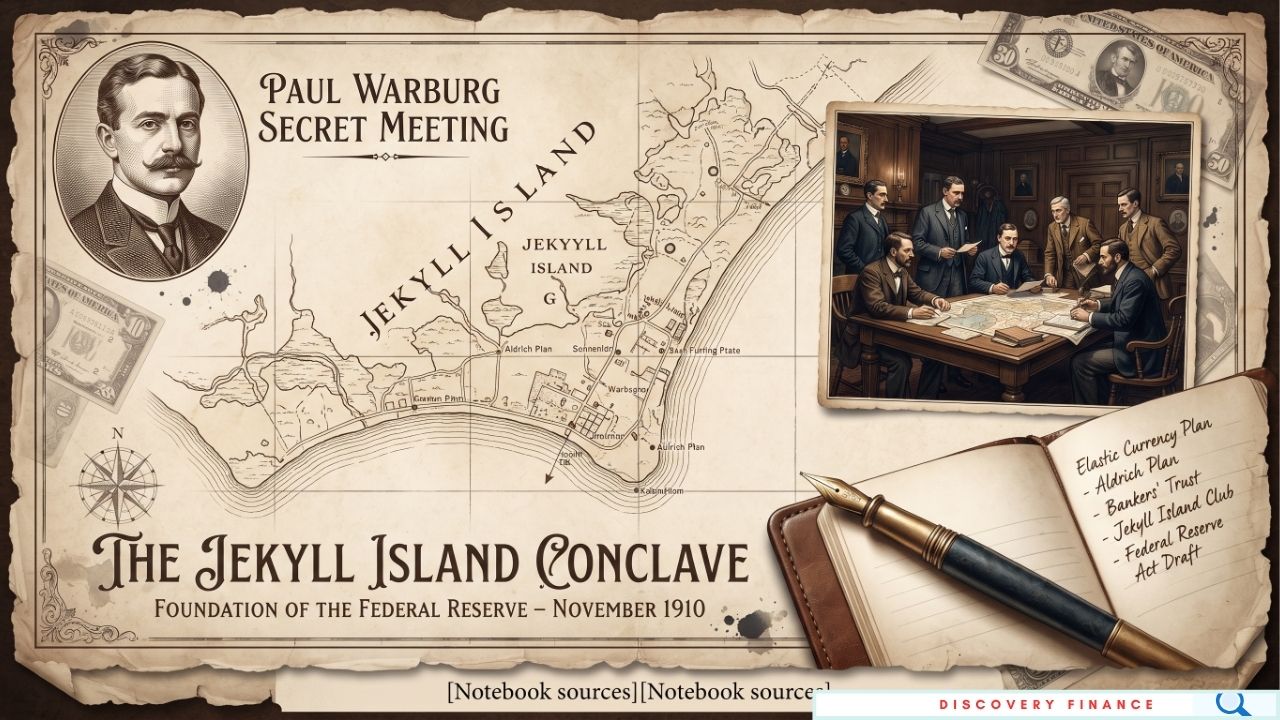
Picture a crisp November evening in 1910. A private train car rolls out of a New Jersey station, carrying a handful of the most powerful financiers in America. To throw off reporters and the public, they are traveling under assumed first names only. Their destination? A secluded island off the coast of Georgia for what would become known as the Paul Warburg Secret Meeting, a clandestine retreat that completely altered the course of modern economic history.
If you are trying to make sense of how elite financial machinations trickled down to influence modern-day banking dynasties, you will find a fascinating parallel in this read on David Rockefeller global banking influence that shaped modern finance.
The Mastermind Behind the Paul Warburg Secret Meeting
To understand how the Federal Reserve came to life, we have to look closely at the man who engineered its blueprint: Paul Warburg. Warburg was a German-American banker who immigrated to the United States with a deep, working knowledge of European central banking systems. While America was repeatedly plagued by chaotic financial panics—most notably the devastating Panic of 1907—countries like England and Germany enjoyed stable, centralized monetary systems.
Warburg argued passionately that the U.S. needed an elastic currency—money supply that could expand and contract based on the actual needs of trade and commerce. Senator Nelson Aldrich, head of the National Monetary Commission, teamed up with Warburg and a tight circle of elite associates to draft the legislation. They needed absolute secrecy to keep populist politicians and anti-Wall Street critics from killing the project before it even started.
Inside the Paul Warburg Secret Meeting on Jekyll Island
Disguised as a casual duck-hunting trip, the group sneaked off to the exclusive Jekyll Island Club. Alongside Warburg and Aldrich, attendees included figures like Frank Vanderlip, Henry P. Davison, and Assistant Treasury Secretary A. Piatt Andrew. For over a week, working long hours into the night, these men hammered out the structural framework for a national reserve association during the Paul Warburg Secret Meeting.
The resulting framework wasn’t immediately passed into law in its original form, but it served as the direct foundation for the Federal Reserve Act signed by President Woodrow Wilson in December 1913.
While the Federal Reserve was built to manage national macroeconomics and stabilize banking panics, managing your personal cash flow doesn’t require a secret island getaway. If you want to take better control of your household capital without losing your mind, you can explore tools featured in this guide to the best budgeting apps to streamline your financial finances.
Echoes in Modern Banking
Looking back, the clandestine nature of the Jekyll Island retreat has fueled a century of conspiracy theories. Yet, stripped of the folklore, the Paul Warburg Secret Meeting stands as a textbook example of how private sector expertise can directly hijack public policy formulation. Whether you view the Fed as an essential economic safety net or an opaque cartel of private banking interests, it all traces back to that quiet week of duck-hunting ruses in Georgia.
What are your thoughts on how central banks are structured—do you think monetary policy should be managed by isolated experts, or should it be entirely transparent to the public?
Share this:


You May Also Like

Michele Sindona Mystery From Vatican Banker to Poisoned Prisoner

5 Life-Changing Lessons from the Latest Dave Ramsey Podcast Episodes