Richard Whitney Scandal That Rocked the New York Stock Exchange
Have you ever looked at Wall Street today and wondered how it transformed into a heavily regulated institution? It is easy to assume that oversight has always been there, but the road to modern financial compliance was paved with jaw-dropping betrayals. Take a journey back to the late 1930s, and you will find a seismic event that changed American finance forever: the Richard Whitney Scandal. It is a story that proves that no matter how elite or untouchable someone seems, greed and bad habits can bring down an empire—much like how historical figures had to rethink their entire approaches to wealth, governance, and stability, as seen when exploring how the Cosimo de Medici banking empire that secretly shaped Europe managed its own immense power.
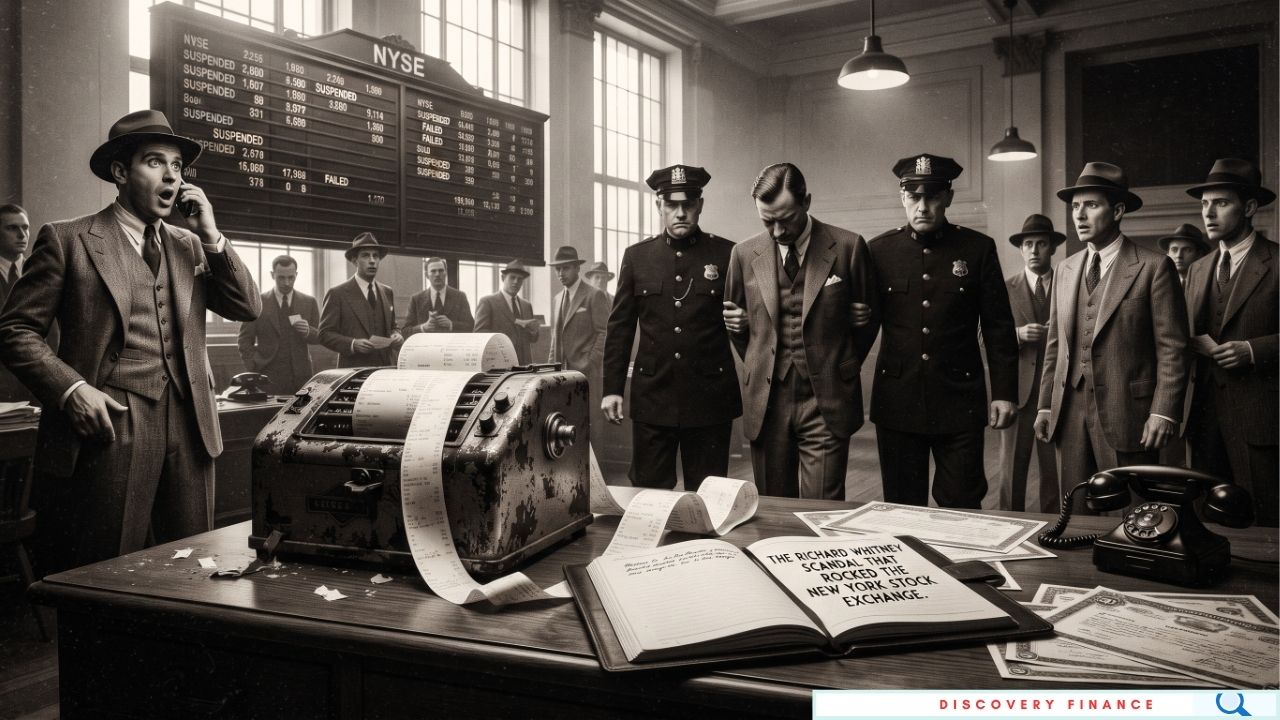
From Wall Street Royalty to the Center of the Richard Whitney Scandal
To understand how staggering this betrayal was, you have to look at who Richard Whitney was. He wasn’t just any broker; he was Wall Street royalty. Groton-educated, a Harvard graduate, and closely connected to the powerful J.P. Morgan family, Whitney served as the charismatic President of the New York Stock Exchange from 1930 to 1935. He was the literal face of establishment capitalism, famously trying to stop the 1929 stock market crash by dramatically bidding for blocks of stock.
However, behind the polished facade of old-money charm and high society, Whitney was financially drowning. Extravagant living, disastrous personal investments, and speculative business ventures left him neck-deep in debt. To keep up appearances, he began dipping his fingers where they absolutely did not belong—embezzling funds from clients, stealing securities from the New York Yacht Club, and misusing trust funds.
The Fallout: How the Richard Whitney Scandal Changed the Game
By 1938, the house of cards finally collapsed. Whitney’s firm went spectacularly insolvent, and the shocking truth came to light: the former golden boy of the Big Board was a common embezzler. The psychological shock wave hit the financial district harder than almost anything else. People realized that while everyday workers were striving for stability—much like modern professionals navigating corporate structures and trying to secure their financial futures by learning how to maximize your employee benefits—the very guardians of capital were playing by an entirely corrupt set of rules.
The aftermath was swift and transformative:
- The Fall of the Old Guard: Wall Street’s old guard lost its grip on power as public outrage demanded total accountability.
- Empowering the SEC: The newly formed Securities and Exchange Commission (SEC), led by reformers, used the public scandal as the ultimate leverage to enforce stricter federal oversight.
- Structural Reform: The New York Stock Exchange was radically restructured, introducing a paid, independent president rather than relying on self-policing Wall Street insiders.
Reflecting on the Richard Whitney Scandal reminds us that transparency and robust internal controls aren’t just corporate buzzwords—they are essential safeguards to keep personal greed from tearing down entire economic systems.
What are your thoughts on how financial scandals reshape the laws we follow today?
Share this:


You May Also Like

Social Media Marketing vs. Digital Marketing: Unveiling the Distinctions and Synergies

Tax Day 2026: Everything You Need To Know Before the April 15 Deadline