Jesse Livermore Trading Lessons From One of History’s Greatest Speculators
If you’ve ever spent time digging into the history of Wall Street, you’ve undoubtedly stumbled upon the legend of the “Boy Plunger.” Jesse Livermore wasn’t just another trader; he was a master of market psychology whose approach remains remarkably relevant today. Whatever you are a beginner or a seasons pro, integrating Jesse Livermore trading lessons into your routine can hep you cut through the market noise and focus on what actually moves the needle: price, patience, and discipline.
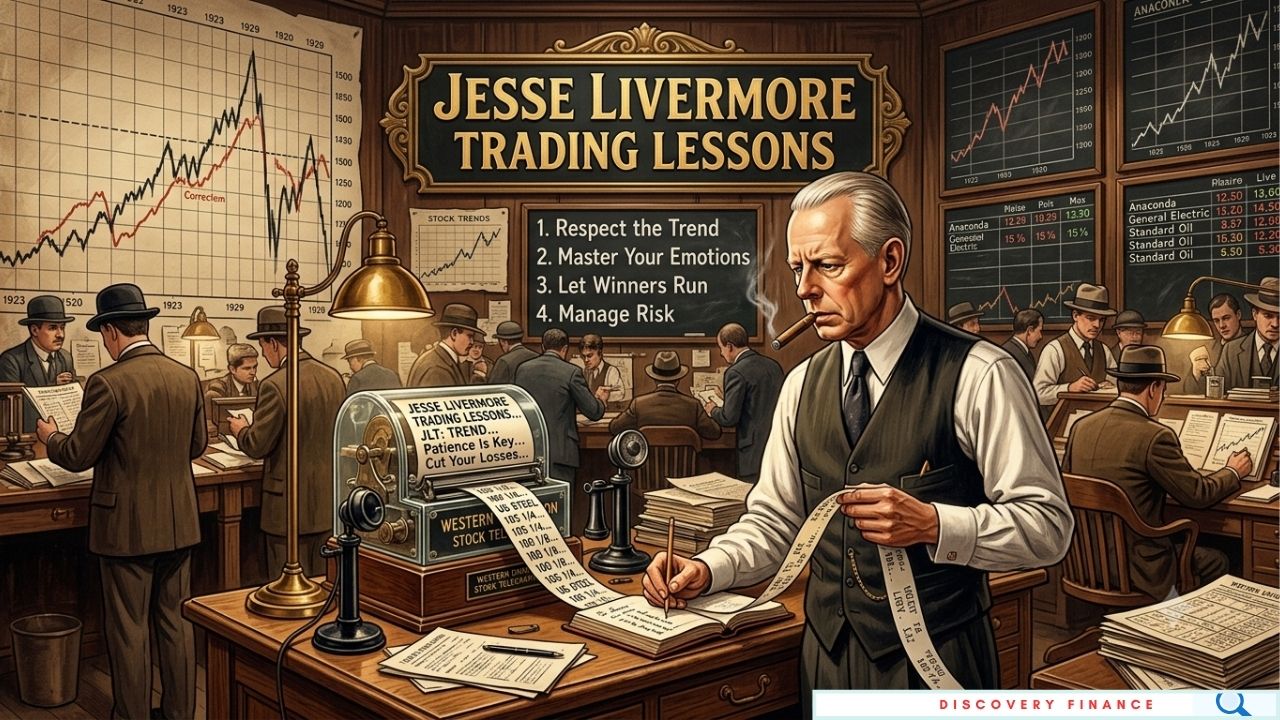
Why Jesse Livermore Trading Lessons Still Matter
It is easy to think that because Livermore operated in the early 20th century, his methods are outdated. But here is the secret: market change, but human nature never does. The greed and fear that caused crashes in the 1920s are the exact same emotions driving crypto volatility or tech stock bubbles today.
Understanding these dynamics is vital. Just as you need to clear out the digital clutter in your life – perhaps by finding and canceling ghost subscriptions that drain your resources – you must also purge the “junk” from your trading strategy. Livermore taught that most market action is just noise; if you can filter that out, you’re already ahead of the pack.
Applying Jesse Livermore Trading Lessons to Modern Markets
Master the Art of Patience
One of the most famous Jesse Livermore trading lessons is simply: “It never was my thinking that made the big money for me. It always was my sitting.” In an age of high-frequency trading and 24/7 news cycles, we feel pressured to be constantly active. Livermore would argue the opposite. Sometimes, the most profitable move is doing absolutely nothing until the market confirms your thesis.
If you are interested in how historical figures navigated massive shifts, it’s worth reading about the high-stakes currency trade that shocked the global financial market. Just like Soros, Livermore understood that you shouldn’t fight the market – you must align with it.
Cut Your Losses, Let Your Winners Run
It sounds simple, but it’s the hardest rule to follow. Most retail traders do the exact opposite: they hold onto losing positions in the “hope” they’ll break even, and they panic-sell winners to lock in a small profit.
Livermore’s advice?
- Never average down. If you are losing money, the market is telling you that you are wrong. Don’t double down on a mistake.
- Respect the trend. Don’t try to guess the top or the bottom. Wait for the market to move, then ride the momentum.
- Keep your head. If a trade isn’t working, exit quickly. A small loss is just a business expense; a large loss can be a catastrophe.
The Power of Pivotal Points
Livermore didn’t just guess; he tracked price action. He looked for “pivotal points” – those moments when a stock breaks out of a base or hits a new level of strength. He believed that if a stock is acting right, you shouldn’t be in a hurry to sell it. The market has a way of telling you exactly where it wants to go; your job is simply to listen, observe, and act without emotion.
Ultimately, trading is less about “beating” the market and more about managing your own psychology. As you continue your journey, remember that Jesse Livermore wasn’t born a genius – he was a student of the tape who learned through trial, error, and immense discipline.
What is the biggest challenge you find when trying to stick to a disciplined trading plan?
Share this:





One Comment
Pingback: