Nick Leeson Barings Bank Collapse That Shocked the Financial World
Picture this: a 233-year-old merchant bank that had survived wars, funded empires, and even counted British royalty among its clients, gets brought down entirely by a 28-year-old rogue trader sitting thousands of miles away. It sounds like the plot of a Hollywood thriller, but it actually happened. The Nick Leeson Barings Bank scandal remains one of the wildest cautionary tales in financial history, proving just how quickly things can unravel when risk management goes completely out the window.
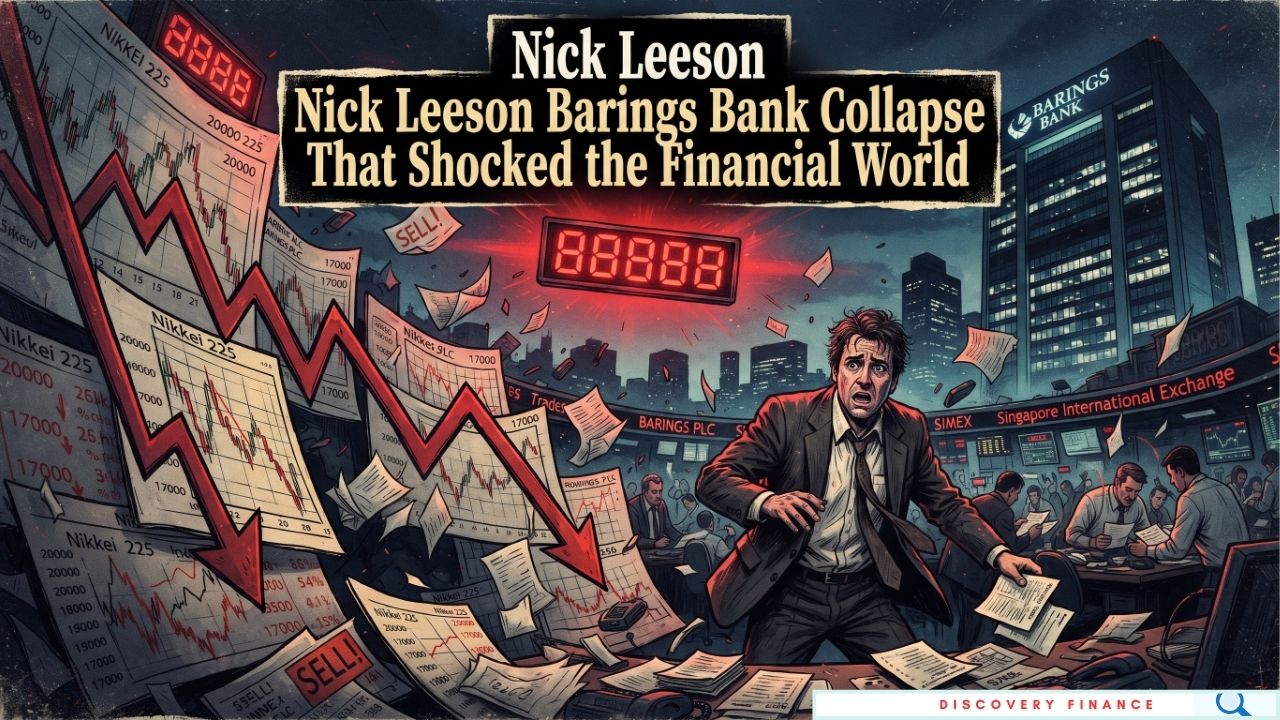
The Rise of a Star Trader and the Fatal Flaw of Nick Leeson Barings Bank
Back in the early 1990s, Nick Leeson was sent to Singapore to manage operations for Baring Futures. On paper, he was a whiz kid—a young, ambitious worker who seemed to pull in effortless profits through arbitrage. Because he was viewed as a star performer, London management practically gave him free rein.
Here is where the massive systemic failure happened: Leeson was put in charge of both executing the trades and settling the back-office accounts. It is kind of like letting a student grade their own final exams. This dangerous lack of segregation of duties meant there was no independent oversight to check if his numbers actually matched reality.
How a Secret “Error Account” Doomed Nick Leeson Barings Bank
When some of Leeson’s early trades started going south, instead of owning up to the mistakes, he decided to sweep them under the rug. He opened a now-infamous suspense ledger—Account 88888—originally meant to log minor administrative errors, but instead used it as a black hole to hide millions in mounting losses.
As the losses snowballed, Leeson doubled down, taking riskier and riskier bets in the futures market to claw his way back. This desperate cycle mirrors how everyday folks fall into traps when trying to fix financial blunders out of panic—much like how people struggle with how to stop impulse spending and use psychological hacks to reclaim cash instead of addressing the root issue. Except in Leeson’s case, his “impulse trades” involved multi-million-dollar bets on the Japanese stock market.
The Final Blow: Kobe Earthquake and the Aftermath
The house of cards finally collapsed in January 1995 when the devastating Kobe earthquake struck Japan, sending the Nikkei index plummeting. Leeson’s heavily leveraged bets backfired catastrophically, piling up losses totaling around £830 million—surpassing the entire capital base of the bank itself.
Realizing the game was up, Leeson fled across Southeast Asia before being arrested in Germany and later jailed in Singapore. Meanwhile, Barings Bank was declared insolvent and sold off for a symbolic £1 to the Dutch financial giant ING.
If this kind of high-stakes corporate catastrophe fascinates you, it is eerily similar to other modern financial tremors, such as the Jerome Kerviel trading scandal that cost billions overnight. Both stories serve as timeless reminders that without tight internal controls, human ego and market volatility can sink even the oldest institutions overnight.
What are your thoughts on corporate risk management—do you think upper management should always carry the blame when individual employees go rogue?
Share this:


You May Also Like

How to Use the Dave Ramsey Investment Calculator to Predict Your Future Millions

Satoshi Nakamoto Identity Mystery That Changed the Future of Money