Warren Buffett Investment Strategy That Changed the Stock Market Forever
Warren Buffett Investment Strategy is more than just a famous phrase in the finance world – it is a simple, patient, and surprisingly practical way of thinking about money. While many investors chase the newest trend, the hottest stock, or the fastest way to get rich, Buffett built one of the greatest investing records in history by doing almost the opposite: buying strong businesses, holding them for a long time, and staying calm when everyone else panics.
And honestly, that is what makes his story so powerful. Buffett did not change the stock market by being flashy. He changes it by proving that common sense, discipline, and patience can outperform noise, hype, and emotional decision-making.
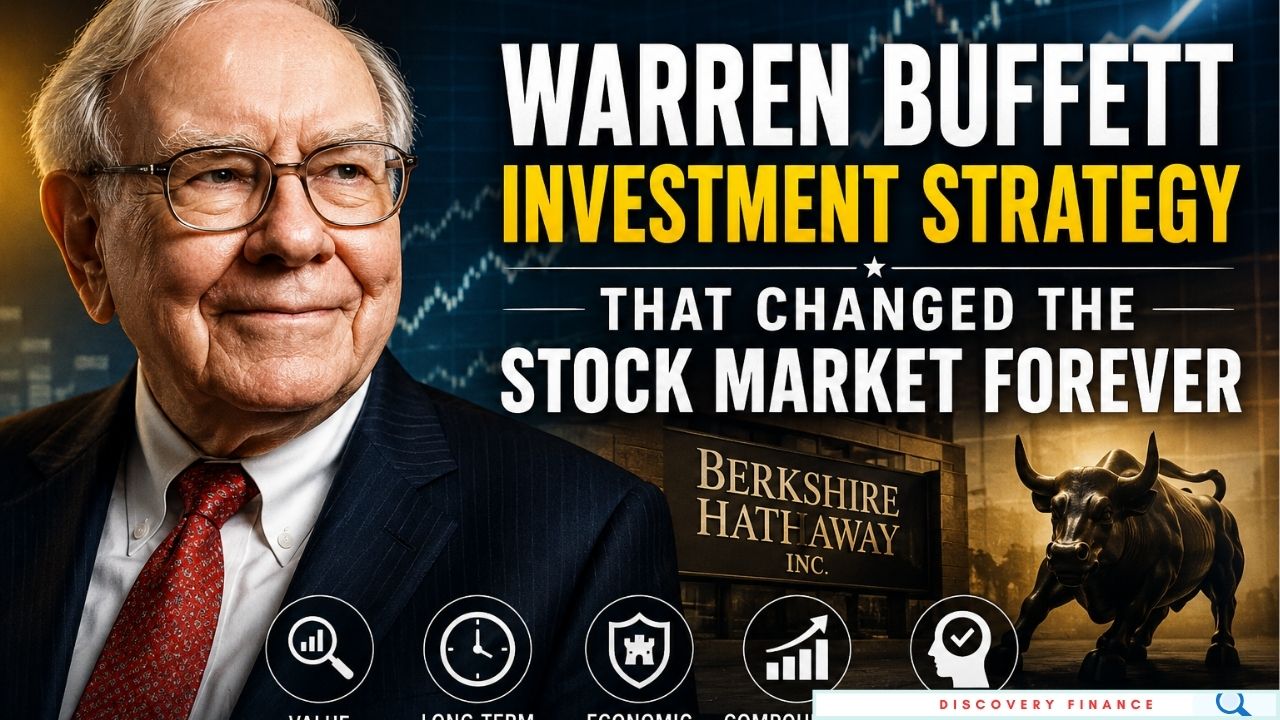
What Makes the Warren Buffett Investment Strategy So Powerful
The Warren Buffett Investment Strategy became legendary because it focuses on one big idea: do not just buy stocks – buy pieces of real businesses.
Buffett is known for value investing, a method influenced by Benjamin Graham, where investors look for companies that appear undervalued compared with their true business worth. Over time, Buffett’s style evolved from simply buying cheap stocks to buying high-quality companies with durable competitive advantages, strong management, and long-term earning power.
That sounds simple, but it is not always easy.
Why? Because the stock market is emotional. Prices go up and down everyday. News headlines can make people panic. Social media can make people feel like they are missing out. But Buffett’s strategy reminds investors to slow down and ask: “Is this actually a good business?”
That one question changed the way millions of people think about investing.
Warren Buffett Investment Strategy: Buy Businesses, Not Just Stocks
One of the biggest lessons from Buffett is that a stock is not just a number on a screen. It represents ownership in a company.
When Buffet invested in companies like Coca-Cola, American Express, and Apple, he was not just betting on short-term price movement. He was looking at the business itself: its brand, customers, profits, management, and ability to survive for decades.
This mindset is what separates investing from gambling.
A trader might ask, “Will this stock go up next week?”
Buffet would ask, “Will this business still be valuable 10, 20, or even 30 years from now?
That is completely different way of thinking.
Warren Buffett Investment Strategy Lesson #1: Stay Within Your Circle of Competence
One of Buffett’s most famous principles is the “circle of competence”. In simple words, it means you should invest in business you understand.
You do not need to understand every company, every industry, or every financial product. You only need to know your own lane.
For example, if you understand food brands, banks, insurance, real estate, or consumer products, you may be better at evaluating those businesses than a complicated tech startup you cannot explain. Buffett has often emphasized that investors should avoid areas they do not understand, because confusion can lead to expensive mistakes.
This is one reason his strategy feels so personal. It does not ask you to be a genius. It asks you to be honest with yourself.
If you cannot explain how a company makes money, maybe it is not the right investment for you.
Warren Buffett Investment Strategy Lesson #2: Look for a Strong Competitive Advantage
Buffett loves businesses with what he calls an “economic moat.”
Imagine a castle surrounded by water. That moat protects the castle from enemies. In business, a moat protects a company from competitors.
A company can have a moat because a strong brand, loyal customers, low costs, patents, distribution power, or a product people keep buying no matter what happens in the economy.
Think of companies people use again and again. Soft drinks. Insurance. Payment networks. Everyday products. These businesses may not always sound exciting, but they can be incredibly powerful when they produce steady profits for many years.
This is where Buffett’s style feels very different from hype investing. He does not need a company to be trendy. He needs it to be durable.
Warren Buffett Investment Strategy Lesson #3: Be Patient Enough to Let Compounding Work
If there is one thing that made Buffett truly different, it is patience.
Many investors want quick wins. Buffett built wealth by letting time do the heavy lifting.
Compounding is when your money earns returns, and then those returns begin earning returns too. Over long periods, this can be extremely powerful. But compounding needs time – and that is where many people fail.
They sell to early.
They panic during downturns.
They jump from one trend to another.
They get bored.
Buffett’s approach teaches the opposite: buy wonderful businesses and give them time to grow.
This is why his strategy feels almost boring at first. But over decades, “boring” can become brilliant.
Warren Buffett Investment Strategy Lesson #4: Do Not Let Market Panic Control You
The stock market can be dramatic. One week, everyone is excited. The next week, everyone is scared.
Buffett’s strategy teaches investors to stay emotionally ready. He has long warned against letting fear and greed control investment decisions. Instead of reacting to every headlines, he focuses on the underlying business.
This is a lesson that applies beyond stocks too. Whether you are investing, saving for retirement, or trying to protect your financial future, emotional decisions can hurt long-term plans. For readers thinking about retirement planning, the discussion about whether your 2026 retirement plan is at risk connects well with the same idea: your money decisions should be guided by strategy, not panic.
Buffett’s calmness is not accidental. It is part of the system.
Warren Buffett Investment Strategy Lesson #5: Cash Is Not Weakness – It Is Opportunity
Another powerful part of Buffett’s philosophy is his respect for cash.
Some investors feel pressure to be invested all the time. Buffett does not think that way. He is willing to wait until the right opportunity appears.
That patience can be frustrating, especially when the market is rising. But cash gives investors flexibility. It allows them to buy when others are forced to sell.
Berkshire Hathaway has often held large amounts of cash, especially during periods when Buffett believed attractive opportunities were limited. In Berkshire’s recent transition period under Greg Abel, reports have continued to highlight the company’s large cash position and careful capital allocation approach.
In simple terms: Buffett does not swing at every pitch. He waits for the right one.
Warren Buffett Investment Strategy and the Berkshire Hathaway Legacy
Buffett did not just become rich from investing. He built Berkshire Hathaway into one of the most admired companies in the world.
Berkshire owns a mix of operating businesses and stock investments, including insurance, energy, railroads, consumer brands, and major public company holdings. This structure allowed Buffett to apply his investment principles on a massive scale.
But now, Berkshire has entered a new chapter. Greg Abel officially became Berkshire Hathaway’s CEO in 2026, after Buffett stepped aside from the role, while Berkshire’s long-term culture and investment philosophy remain central to the company’s identity.
For investors following this major leadership, the Greg Abel succession and what investors need to know is an important part of understanding how Buffett’s legacy may continue in the years ahead.
The big question now is not only what Buffett built – but how much of his strategy will remain at the heart of Berkshire’s future.
The Investment Strategy Changed How Ordinary People Think About Investing
Before Buffett became a global investing icon, many people viewed the stock market as something mysterious, risky, or only for Wall Street professionals.
Buffett helped make investing feel more understandable.
He talked about businesses in plain language. He explained mistakes openly. He wrote shareholder letters that many investors treated like investing lessons. Berkshire’s own annual reports describe Buffett’s shareholder letters and annual meeting discussions as central expressions of his commitment to partnership with shareholders.
That personal, honest communication style made people trust him.
He showed that investing does not have to be about complicated charts, constant trading, or secret formulas. It can be about understanding value, being patient, and thinking like a business owner.
The Strategy Is Not About Getting Rich Overnight
One of the most refreshing things about Buffett’s strategy is that it does not promise overnight success.
Actually, it almost warns against it.
Buffett’s approach is slow, steady, and long-term. It rewards people who can wait. It rewards people who can ignore noise. It rewards people who can stay disciplined even when the market feels scary or boring.
That may not sound exciting, but it is realistic.
And maybe that is why his strategy has lasted so long. It is not built on hype. It is built on human behavior, business fundamentals, and time.
Why the Warren Buffett Investment Strategy Still Matters Today
The strategy still matters today because investors today face more noise than ever.
They are viral stock tips.
Crypto trends.
AI hype.
Market predictions.
Recession fears.
Influencers promising fast wealth.
In that kind of environment, Buffett’s message feels almost like a financial reset button.
Understand what you own.
Do not overpay.
Think long term.
Avoid emotional decisions.
Be patient.
Let compounding work.
These are not old-fashioned ideas. They may be even more useful now because the modern market moves so fast.
Final Thoughts
The Warren Buffett Investment Strategy changed the stock market forever because it changed how people think about investing.
Buffett proved that you do not need to chase every trend to build wealth. You do not need to predict every market movement. You do not need to be smartest person in the room.
But you do need discipline.
You need patience.
You need emotional control.
And most of all, you need to treat investing like ownership – not gambling.
That is the real beauty of Buffett’s strategy. It is simple enough for ordinary people to understand, but powerful enough to build one of the greatest fortunes in history.
In a world where everyone seems to be rushing, Buffet’s greatest lesson may be this: sometimes, the smartest investor is the one who know how to wait.
Share this:



One Comment
Pingback: