Red Lobster Closure Explained: Why Iconic Locations Are Shutting Doors for Good
If you’ve ever celebrated a family milestone or simply satisfied a serious seafood craving over a basket of warm, buttery biscuits, the recent news around your favorite casual dining chain probably hits close to home. The widespread discussion surrounding the Red Lobster closure isn’t just about losing a familiar place to get great seafood; it represents a massive shift in how legacy restaurant brands survive in today’s intense economic climate. While many of us are personally trying to navigate inflation by focusing on everyday economics – like looking into financial wellness at work to maximize employee benefits – major corporations are facing their own extreme financial battles. With the permanent shutdown of its oldest continuously operating location in Tallahassee, Florida, after 56 years of business, the chain’s deep financial vulnerabilities have once again taken center stage.
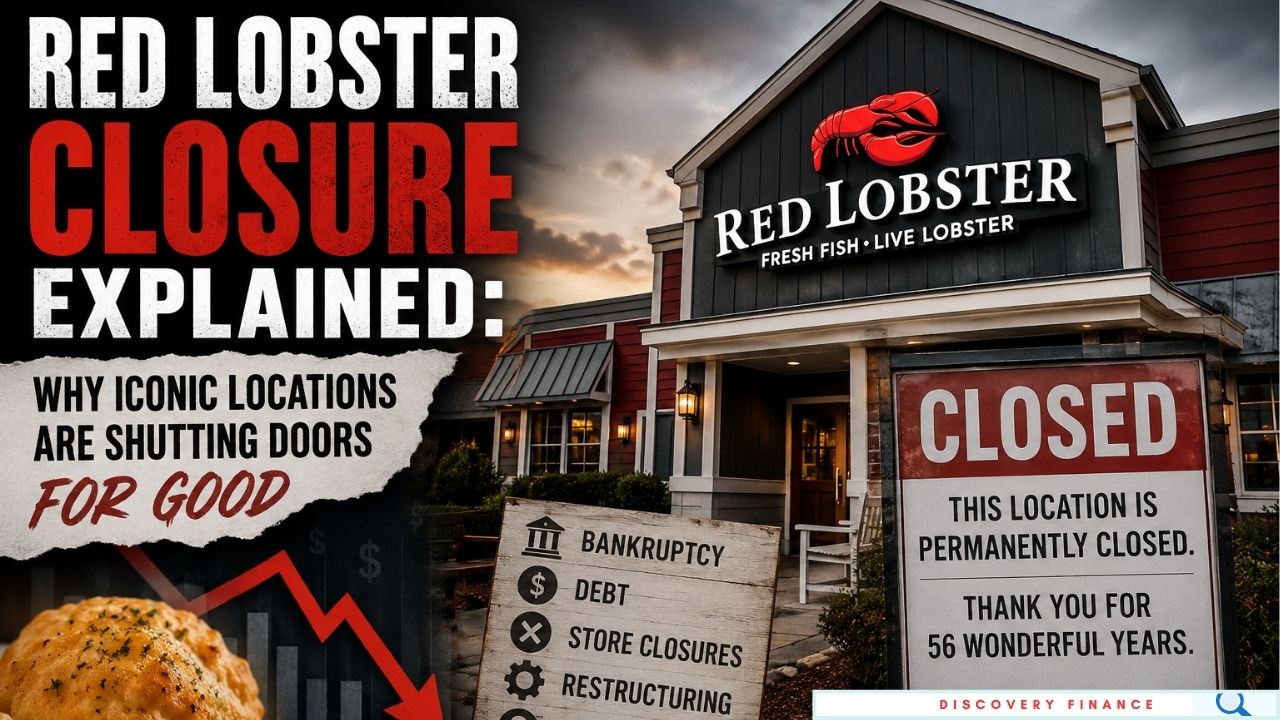
The Real Drivers Behind the Red Lobster Closure
To understand why this is happening, we have to look past the kitchen and dive straight into corporate finance. The Red Lobster closure is part of an aggressive “shrink-to-grow” restructuring strategy engineered by its ownership, led by Fortress Investment Group, and CEO Damola Adamolekun. After initially filing for Chapter 11 bankruptcy due to an unsustainable mountain of debt and expensive, onerous leases, the chain managed to emerge from legal protection with a slimmed-down footprint of roughly 550 locations – down from its original peak of over 700.
Unfortunately, exiting bankruptcy doesn’t automatically fix a company’s broken foundation. This ongoing scaling down proves that turning a massive legacy brand around is incredibly uneven, especially when trying to restore profitability under the weight of persistent capital shortages. This sweeping consolidation mirrors a broader trend shaking up the brick-and-mortar landscape; it is highly reminiscent of the emotional Acapulco restaurant closing notice that recently marked the end of an era for California’s dining culture.
What the Red Lobster Closure Teaches Us About Corporate Turnarounds
So, what does the future look like for the seafood giant, and could more doors shut soon? The truth is that the effectiveness of the Red Lobster closure strategy remains to be seen, as reports indicate the company has still struggled with profitability in its recent quarters. Management is working hard to stabilize operations by aggressively cutting costs and restructuring menus, but industry analysts warn that the stakes couldn’t be higher.
If these current downscaling measures fail to steady the ship, the chain faces the very real risk of a second bankruptcy filing – a scenario known in the financial world as a “Chapter 22.” This painful structural realignment isn’t unique to casual dining either; it’s a structural reality across multiple sectors, much like the retail resets driving the latest Kohl’s stores closing developments. For now, all we can do is watch this high-stakes corporate turnaround plays out – and perhaps enjoy those Cheddar Bay Biscuits while our local branch is still standing!
Share this:


You May Also Like

The Future of Finance: What You Need to Know About the Great Wealth Transfer

John Bogle Index Fund Revolution That Changed Investing Forever