Understanding the K-shape Economy: Why the Financial Path is Splitting in 2026
By mid-2026, if you’re looking at the financial pulse of the United States, one term keeps rising to the top: the K-shape economy. It might sound like technical jargon, but once you look at the world around you, it makes perfect sense. We aren’t all moving in the same direction anymore. While some households are seeing their net worth soar through investments and home quality, others are struggling just to keep up with the rising cost of eggs and electricity. In a K-shape economy, the path splits – the “upper arm” of the K represents growth for some, while the “lower leg” represents the financial decline or stagnation for many others.
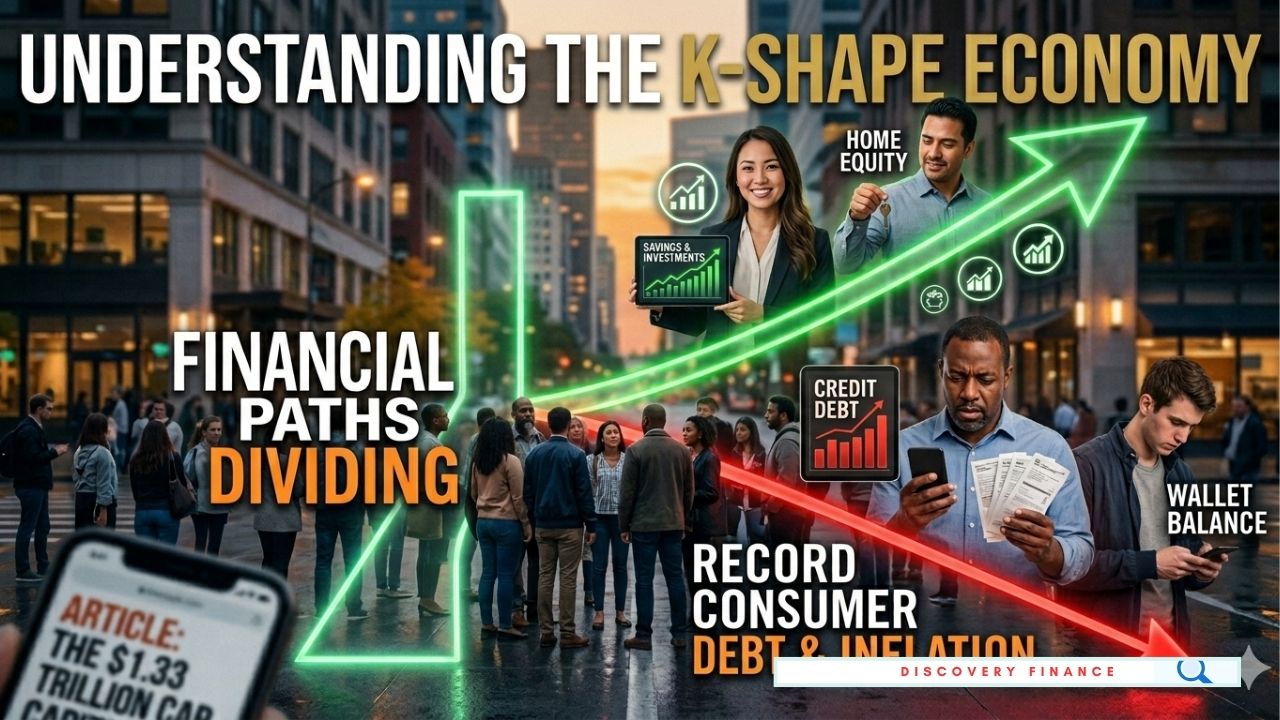
What exactly is a K-shape economy?
In simple terms, a K-shape economy occurs when different parts of society or different industries recover or grow at completely different rates following an economic shift. In the past, we often talked about “V-shaped” recoveries (a quick drop followed by a quick bounce back). However in 2026, high interest rates and persistent inflation have created a divide. Those with significant assets, like stocks or real estate, continue to build wealth. On the other hand, those who rely solely on wages and carry high-interest debt are finding themselves on the downward slope of the “K”.
How the K-shape economy affects your wallet
This isn’t just a theory found in textbooks; the K-shape economy has tangible, daily consequences for families across the US. If you find yourself on the upper half, you might be benefiting from high-yield savings accounts or a stable mortgage. But for a huge portion of the population, the challenge lies in managing the widening gap between income and expenses.
Several factors drive this divergence:
- The Asset Gap: Homeowners who locked in low mortgage rates years ago are shielded, while renters face ever-climbing monthly costs.
- The Credit Divide: “Super Prime” borrowers with high credit scores still enjoy access to favorable terms, whereas “Subprime” borrowers are facing “performance stress” as borrowing costs remain high.
- Employment Shifts: While high-tech and specialized finance sectors continue to see wage growth, many service-oriented roles are struggling to keep pace with the cost of living.
Credit Card Debt and the K-shape economy
One of the most glaring indicators of this K-shape economy is the current state of consumer debt. For many individuals on the lower leg of the K, credit cards have shifted from being a tool for convenience to a necessary lifeline for essentials. The data is sobering, as seen in The $1.33 Trillion Cap: Crucial 2026 Credit Card Debt Statistics You Need To Know, highlighting that a record number of Americans are hitting their credit limits just to get by.
These figures represent the real-world financial stress felt by those trying to avoid falling further down the economic slope. To navigate these times, it’s helpful to stay updated with the latest economic outlook guides to understand how to better protect our personal assets..
At the end of the day, while the K-shape economy presents significant challenges, staying informed is your best defense. By understanding these trends, you can make smarter decisions – whether that’s aggressive debt repayment, cautious investing, or simply tightening the budget. No matter which direction the economy moves, your path to financial stability starts with the small, informed choices you make today.
Share this:



One Comment
Pingback: